
Self-mastery is not a term you hear often. However, it is easy to make the argument that self-mastery is at the heart of success. Like many parts of our lives, learning to develop habits and a mindset of self-mastery is something that is ongoing and creates a path to follow to help you to achieve goals and to become the person you want to become.
The opposite of self-mastery is living a life of constantly going from one thing to another. There is a lack of commitment, a lack of a strategy, and a lack of an internal compass to keep us going in the right direction. It is listening to that negative voice in our head that tells us we can’t achieve something, that we aren’t good enough, or that we lack some necessary components to become the personal and the professional we want to become.
There are several different strategies to build your self-mastery. These include:
- Visualize your goals – take the time to see yourself achieving your goals. Some people do this with vision boards, some with SMART goals, or others with longer-term professional goals. Make the picture as complete as possible as this creates motivation and inspiration to continue to strive for your goals.
- Develop a routine – look for ways to routinize your goals and the changes you are making in your life. Perhaps this is practicing mindfulness or meditation for 10 minutes every morning or reading one book a week related to your professional or personal development goals.
- Recognize negative self-talk – a negative mindset about our ability to achieve our goals is an obstacle to developing self-mastery. Your mind is continuously providing you with messages of doubt and the potential for failure. Recognizing these negative voices and replacing them with a positive message is a process you can learn to do. Replace the negative message (I can’t do this) with the positive thought (I have the skills and the abilities to succeed at this task).
- Write empowering thoughts and beliefs – one essential component of self-mastery is a growth mindset. In other words, the thinking that personal improvement and growth is possible throughout life. The opposite of this is a fixed mindset, where people do not see the ability to make meaningful changes and grow. Noticing and accepting positive change helps to foster a growth mindset. By learning to change, we learn to control how we move forward.
Developing self-mastery and a growth mindset are two key attributes of becoming our best selves. It makes sense that we first have to believe in our ability to be successful and grow before fully engaging in the process.
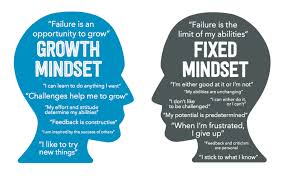

 It is easy to become complacent, whether in business, or in life in general. Every so often, it’s important to have a “reset” if you find that you have allowed your work or your personal life to stagnate. Being satisfied with the way things are, or believing you don’t have the power to change them, keeps you in a fixed mindset. When you’re ready to move something forward, like changing a relationship for the better, or increasing your business, it’s critical to switch to a growth mindset.
 Your own beliefs and internal voices have a powerful influence on your present and future achievements. We’ve often heard the adage, “if you think you can or you think you can’t, you are right”, and this truth can affect us more often than we may realize. One way to look at your beliefs and see where you can improve is to examine your mindset. Do you have a “fixed” mindset, or a “growth” mindset.